Linear periodization is the original, textbook model — the one most people picture when they hear the word. You ramp from lots of moderate-weight work toward a little very-heavy work across a training cycle, aiming to be at your strongest on a chosen date. Here's how the phases fit together, where it shines, and where it falls short.
Linear periodization is the classic model in which you progress from higher volume and lower intensity toward lower volume and higher intensity across a macrocycle, usually to peak strength for a specific date. In practice the cycle moves through phases — a hypertrophy base (higher reps, moderate load), then a strength phase (fewer reps, heavier load), then a peaking and taper (near-maximal loads, low volume) so you arrive fresh. It was formalized out of Soviet sport science by Leo Matveyev and popularized in the West by Tudor Bompa. It's simple and great for peaking and novices, but its main criticism is that focusing on one quality for weeks can let the others fade.
Linear periodization — often just called "classic" or "traditional" periodization — organizes a whole training cycle around one long, one-direction shift: volume starts high and intensity starts low, and over the weeks volume drops while intensity climbs. Early on you do many reps at moderate weights; by the end you do very few reps at very heavy weights. The logic is to build a broad base first (muscle, work capacity, technique) and then convert that base into maximal strength, timing the heaviest, freshest work to land on a target date. It's the model Leo Matveyev is credited with formalizing within Soviet sport science, and the one Tudor Bompa carried into Western coaching. Underneath it all is ordinary progressive overload — linear periodization is simply one way to sequence that overload across months.
A linear macrocycle is usually split into a handful of mesocycles, each with a single emphasis. As you move down the table, reps fall and load rises — the defining "linear" shape.
| Phase | Typical loading | Goal |
|---|---|---|
| Hypertrophy | Higher volume, moderate load (e.g. sets of 8–12) | Build a muscle and work-capacity base |
| Strength | Moderate volume, heavier load (e.g. sets of 3–6) | Convert the base into maximal strength |
| Peaking / taper | Low volume, near-maximal load (e.g. singles–triples) | Express peak strength fresh on the date |
The sequence maps hypertrophy → strength → peaking, and the taper at the end deliberately cuts total work so accumulated fatigue clears and your best day lands where you planned it. After the peak (or the competition), you deload and start the next macrocycle from a fresh hypertrophy base.
Work backward from the date you care about, then let intensity rise as volume falls across the weeks you have. The loop:
After the peak, reset: take a deload, then begin a new macrocycle from a fresh hypertrophy base. If you'd rather manage day-to-day loading by feel within any phase, pair this structure with RPE-based autoregulation and the broader progression methods guide.
The strengths are real. Linear periodization is simple — one clear direction, easy to write and easy to follow — which makes it a natural fit for novices and for anyone whose whole goal is to peak for a single date. Concentrating on one quality at a time also lets you push that quality hard. The main criticism is the flip side of that focus: because you emphasize one quality for weeks at a stretch, you may detrain the qualities you're not currently training. Spend a long peaking phase on heavy low-rep work and some of the hypertrophy stimulus fades; spend a long hypertrophy phase and top-end strength dulls. That's the gap the undulating (DUP) and block models were designed to address, each trying to keep more qualities alive at once or to sequence blocks so residual fitness carries forward.
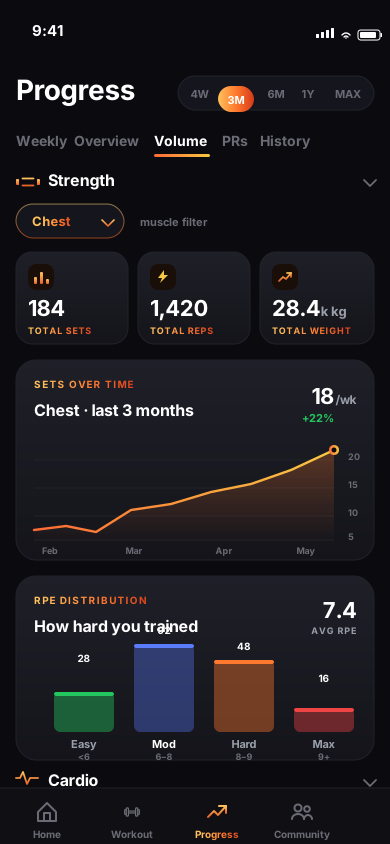
LiftHero records whatever you log — sets, reps, weight and RPE — so you can run a linear cycle and watch the shape appear in your data: rising weight per exercise as the rep counts fall toward your peak. Log each set as you lift and the app charts the trend, so a genuine progression stands out from a stall. To be clear: LiftHero is the measurement layer, not a decision engine — it logs any set free and unlimited, saving a full multi-phase plan is the optional Hero upgrade, and it does not auto-generate or auto-progress your program. You design the linear structure; the app records what you do. Pair it with a plan like 5/3/1 and log every set.
The classic periodization model: across a macrocycle you progress from higher volume and lower intensity toward lower volume and higher intensity, usually to peak strength for a specific date.
Typically hypertrophy first (higher volume, moderate load), then strength (lower volume, heavier load), then a peaking and taper phase (very low volume, near-maximal load) to arrive fresh on the target date.
It comes from Soviet sport science; Leo Matveyev is credited with formalizing the classic linear model, later popularized in the West by Tudor Bompa.
Yes — it's simple to run and its steady, one-direction progression suits novices well, though beginners can also do fine on plain linear progression without a full periodized structure.
Because you emphasize one quality at a time for weeks, you may detrain the qualities you're not currently training — for example losing some hypertrophy stimulus during a long peaking phase.
Linear changes the emphasis slowly across the whole macrocycle; undulating (DUP) changes intensity and rep ranges frequently — daily or weekly — so several qualities are trained at once.
Log sets, reps, weight, RPE and PRs through every phase — free on iOS.
Download on theApp StoreFree to start · No interruptive ads · 14-day Hero trial
This guide is educational and not medical advice. Consult a qualified coach or medical professional before starting or changing a training program.
By Meitar Lazimi, founder of LiftHero · Last updated July 9, 2026.