Learn

Muscle Recovery: How to Recover Between Workouts

Your muscles don't get stronger in the gym — they get stronger in the hours and days after, while you rest, sleep and eat. Here's what recovery actually is, the levers that matter most, what soreness really tells you, and a practical checklist to recover well between sessions.

Muscle recovery is the process of adaptation that happens between training sessions, not during them. A workout is the stimulus; the repair and growth occur afterward while you rest. The levers that matter most are the boring fundamentals: sleep, adequate protein and overall nutrition, managing your training volume and intensity, and giving each muscle enough time before you train it hard again. Delayed-onset muscle soreness (DOMS) is common but isn't a reliable measure of a good workout. Light active recovery can help you feel better but isn't essential — get the fundamentals right and recovery mostly takes care of itself.

When do muscles actually recover?

The key idea is simple but easy to forget: adaptation happens between sessions, not during them. When you train, you create a stimulus — you challenge the muscle and cause some fatigue and micro-level disruption. The actual response to that stimulus, the repair and the building of a little more strength or size, plays out afterward, in the hours and days while you rest, sleep and eat. That's why the workout alone doesn't determine your results; what you do between workouts matters just as much. Train hard but recover poorly and you leave most of the adaptation on the table. This is also why deloads exist — recovery sometimes needs to be scheduled across a whole block, not just between two sessions.

What matters most for recovery?

Recovery is dominated by a handful of fundamentals. Get these right and you rarely need the gadgets and supplements that get more attention. Here are the levers, roughly in order of impact for most people.

Recovery leverWhat to doWhy it matters
SleepGet consistent, sufficient sleep most nightsThe single biggest lever most people can improve
ProteinSpread adequate protein across the dayProvides the raw material for muscle repair
Overall nutritionEat enough total food to support trainingChronic under-eating slows recovery and progress
Training loadKeep volume and intensity recoverableYou can only adapt to what you can recover from
Time between sessionsLet a muscle rest before training it hard againAdaptation needs time to complete
Stress managementAccount for life stress, not just gym stressFatigue is cumulative across everything you do

Notice what's not at the top of that list: ice baths, massage guns, fancy supplements. They can feel nice, but they're minor next to sleep, food, sensible training load, and time.

What is DOMS, and does soreness matter?

DOMS — delayed-onset muscle soreness — is the achy, tender feeling that shows up a day or two after training, especially after something new or unfamiliar. It's normal, and it tends to fade as your body gets used to a movement. The important point is that soreness isn't a reliable measure of a good workout. It mostly reflects novelty and varies hugely from person to person and muscle to muscle — you can make excellent progress with very little soreness, and you can be extremely sore from a session that did little for you. Chasing soreness as proof you "earned it" is a mistake; it can just mean you did something unfamiliar, or too much too soon. Judge your training by performance and consistency over time, not by how wrecked you feel the next morning.

How long should you rest a muscle?

There's no single number, because it depends on how hard you trained, your experience, and your recovery. As a rough guide, many people leave about a day or two before training the same muscle hard again — enough time for it to recover and be ready for the next stimulus. Bigger, more demanding sessions may need a little more; lighter work may need less. The best signals are practical: if the muscle still feels beaten up or your performance on it is down, it probably needs more time. Full-body soreness or general fatigue is also a hint you're stacking sessions faster than you're recovering. Let performance and feel guide the spacing rather than forcing a rigid schedule.

Does active recovery help?

Active recovery means light, easy movement on your off days — a walk, some easy cycling, gentle mobility work. It can help you feel better, keep you moving, and break up a sedentary day, and plenty of people find it takes the edge off soreness. But it's worth being honest about what it does: active recovery is a nice-to-have, not a requirement for muscles to recover. The actual repair runs on sleep, food and time regardless of whether you take a walk. So treat active recovery as an optional bonus if you enjoy it, not as the thing that determines your results. Don't skip sleep or under-eat and expect a foam-rolling session to make up for it.

A practical recovery checklist

You don't need a complicated routine. Focus on the fundamentals in order, and revisit them whenever recovery feels off.

  1. Prioritise sleep. Aim for consistent, sufficient sleep most nights — it's the biggest lever most people can actually improve.
  2. Eat enough protein and food overall. Spread adequate protein across the day and eat enough total calories to support your training.
  3. Manage volume and intensity. Keep your weekly hard sets and effort at a level you can recover from instead of maxing out every session.
  4. Give each muscle time. Leave enough time — often a day or two — before training the same muscle hard again.
  5. Add light active recovery if you like it. Easy walking or gentle movement can help you feel better, but it's optional.

If you've been consistent with all of this and still feel run-down, that's a cue to back off — a deload can help — and, if it persists, to read up on overtraining vs overreaching.

Recovery, warm-ups and training quality

Recovery isn't only about the hours between sessions — how you handle each session affects how well you bounce back. A proper warm-up helps you train with good technique and control, which tends to mean cleaner, more productive work and less unnecessary beating-up of your joints. Training with sensible effort — leaving a rep or two in reserve on most sets rather than grinding to failure constantly — also lightens the recovery bill without meaningfully hurting results for most people. In other words, recovering well and training well aren't separate projects: quality sessions with adequate rest around them are what let you keep showing up and progressing.

How to track recovery (and how LiftHero helps)

LiftHero helps you see whether you're actually recovering by giving you a record to look at. Because it logs your sets, reps, weight and RPE and lets you add soreness and readiness notes, you can spot the patterns that matter: performance drifting down, effort creeping up at the same weights, or a muscle that's still sore each time you come back to it. Those trends are the real signals that recovery is lagging — far more useful than a single sore morning. To be clear about what the app is and isn't: LiftHero is the measurement layer, not a coach or medical tool. It doesn't auto-generate or adjust your program and won't tell you to take a rest day — you make the call, and the app helps you see why. Saving a full structured plan is an optional Hero feature.
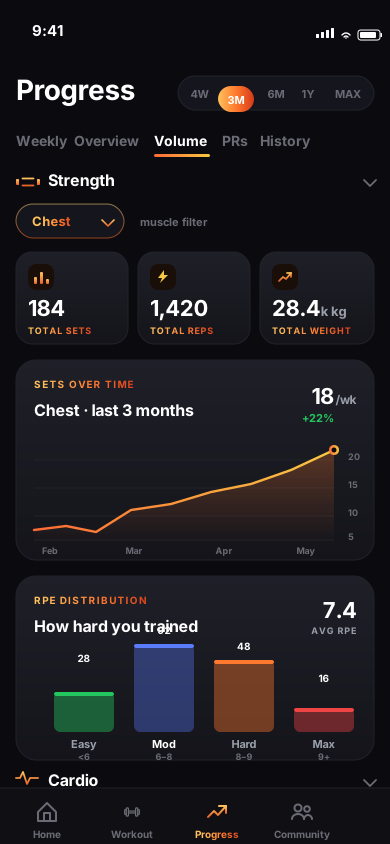
LiftHero chart of performance and volume over time used to judge recovery
LiftHero charts weight, volume and effort over time, so under-recovery shows up as a stall long before you'd notice it session to session.

Frequently asked questions

When do muscles actually recover and grow?

Adaptation happens between sessions, not during them. Training provides the stimulus; the actual repair and growth occur afterward while you rest, sleep and eat. That's why recovery, not just the workout, drives your results.

What matters most for muscle recovery?

The biggest levers are sleep, adequate protein and overall nutrition, managing your training volume and intensity, and giving a muscle enough time between hard sessions. These fundamentals outweigh gadgets and supplements.

Is soreness a good sign my workout worked?

Not reliably. Delayed-onset muscle soreness (DOMS) mostly reflects unfamiliar or novel work and varies a lot between people. You can grow without much soreness and be very sore without much growth, so don't chase it as a measure of a good session.

How long should I rest a muscle between workouts?

It varies with how hard you trained, but many people leave roughly a day or two before training the same muscle hard again. Let performance and how the muscle feels guide you rather than a fixed rule.

Does active recovery help?

Light activity like easy walking or gentle movement can help you feel better and stay mobile, but it isn't required for muscles to recover. The fundamentals — sleep, food and time — do the heavy lifting.

What if I'm still not recovering?

If fatigue, poor sleep or stalled performance persist, you may be under-recovered. Consider a deload, tighten up sleep and nutrition, and if symptoms linger, see a qualified professional.

Track your recovery

Log sets, reps, weight, RPE and soreness notes so under-recovery shows up before it stalls you. Free on iOS.

Download on theApp Store

Free to start · No interruptive ads · 14-day Hero trial

This guide is educational and not medical advice. Consult a qualified coach or medical professional before starting or changing a training program.

By Meitar Lazimi, founder of LiftHero · Last updated July 9, 2026.