Learn · Train anywhere

Home Workouts for Strength

You don't need a gym to get stronger. Bodyweight plus a few dumbbells or bands goes a long way — and the same principle that drives gym progress, progressive overload, works at home too. Here's how to structure a simple home routine and where it honestly hits its ceiling.

You can build real strength and muscle at home with minimal gear. Bodyweight training plus a single pair of dumbbells or a set of bands covers every major movement pattern. Progressive overload still applies — when you can't add weight, you add reps, slow the tempo, use a harder variation, or switch to unilateral (single-limb) versions. Structure it as a simple full-body session done a few days a week and log every set. The one honest caveat: for maximal strength, bodyweight and light dumbbells eventually run out of road compared to a loaded barbell — but for general strength and muscle, home training gets you a long way.

Can you really build strength at home?

Yes — and more than most people assume. Muscle responds to challenging, progressive effort, not to a particular building. A hard set of push-ups or single-leg squats stimulates growth the same way a machine or barbell does, provided the demand keeps climbing. For beginners and intermediates especially, bodyweight and a few dumbbells are more than enough to add real muscle and strength. The trick isn't the equipment; it's applying progressive overload deliberately so each week asks for a little more than the last, and tracking it so you can tell real progress from just going through the motions.

What gear do you actually need?

Almost nothing to start, and a little goes a long way. Here's how each piece of kit expands what you can train.

EquipmentWhat it unlocksPriority
Your bodyweightSquats, lunges, push-ups, planks, and inverted rows under a tableEssential — start here, costs nothing
A pair of dumbbellsPresses, rows, goblet squats, RDLs, curls, shoulder pressesHigh — adjustable pairs save space
Resistance bandsAssisted pull-ups, pull-aparts, extra tension on light movesMedium — cheap, portable, versatile
Pull-up barPull-ups, chin-ups, hanging core work for the back and armsMedium — best upper-back builder at home

Progressive overload without a barbell

At home you rarely have a rack of plates to jump onto, so you overload other variables instead. Add reps at the same load until a rep range feels easy. Slow the tempo — a three-second lowering phase makes any move far harder without extra weight. Shorten your rest to raise density. Move to harder variations — incline push-up to standard to decline to one-arm progressions. And use unilateral (single-limb) work: a single-leg squat or a one-arm row effectively doubles the load on the working limb. These levers are exactly the ones covered in progression methods, and they're what keep a home program progressing long after the "just add weight" option runs out.

How to build a full-body home session

Full-body sessions are the workhorse of home training — you hit everything each time, and the schedule bends around a busy life. Aim for two to four sessions a week with a day between hard efforts. Pick one move per pattern:

  1. Warm up. Five minutes of light cardio and mobility — arm circles, bodyweight squats, hip openers.
  2. Squat. Bodyweight or goblet squat for 3–4 sets of 8–15.
  3. Hinge. Romanian deadlift with dumbbells or a bodyweight hip hinge, 3 sets.
  4. Push. Push-up or dumbbell bench press, 3–4 sets.
  5. Pull. Inverted row under a table, pull-up, or dumbbell row, 3–4 sets.
  6. Core. Plank or hanging leg raise, 2–3 sets.

Progress every session using the levers above — add reps, slow the tempo, or step up to a harder variation when a move feels easy for all sets. For the underlying logic, see bodyweight training and the dumbbell-only workout.

Go deeper on each style

Home training splits naturally into two toolkits. Pick the guide that matches the gear you have.

The honest ceiling

Home training is genuinely effective, but it's not magic, and it's worth being straight about the limit. For maximal strength — the kind you build by grinding a near-limit load — bodyweight moves and light dumbbells eventually stop supplying enough overload. A loaded barbell lets you keep adding small, precise increments almost indefinitely; a fixed pair of dumbbells or your own bodyweight does not. You can push far with tempo, unilateral work and harder variations, but an advanced lifter chasing a bigger squat or deadlift will eventually want a barbell and plates. For general strength, muscle, and staying strong for life, home training is more than enough.

How to track a home program (and how LiftHero helps)

LiftHero logs any exercise you enter — push-ups, bodyweight squats, dumbbell presses, band rows — free and unlimited, and charts your progress over time so you can see whether you're actually overloading. Because home progress often comes from reps, tempo and variations rather than the number on a plate, tracking matters even more than in a gym: it's how you tell a real upward trend from repeating the same session. Saving a reusable routine you can reload each week is the optional Hero upgrade — the logging and charting are free. And to be clear about what it is and isn't: LiftHero measures what you do; it doesn't auto-generate a program for you.

LiftHero progress chart tracking a home workout over time
LiftHero charts your reps and volume per exercise, so real progress at home stands out from a plateau.

Frequently asked questions

Can you build real strength working out at home?

Yes. With bodyweight moves plus a few dumbbells or bands you can build genuine strength and muscle, especially as a beginner or intermediate. Progressive overload still applies — you just add reps, slow the tempo, or move to harder variations when you can't add load.

What equipment do I need to work out at home?

Very little. Your bodyweight covers squats, lunges, push-ups and planks. A single pair of adjustable dumbbells and a resistance band dramatically expand your options for rows, presses and hinges. A pull-up bar is a worthwhile add for back and arms.

How do I progressive overload at home without heavy weights?

Add reps at the same load, slow the tempo and add pauses, shorten your rest, move to a harder variation (incline to standard to decline push-up), or switch to single-limb versions. All of these raise the demand without needing a heavier barbell.

How many days a week should I train at home?

Two to four full-body days a week works well for most people. Full-body sessions let you hit every muscle group frequently, and the schedule is flexible around a busy life. Leave at least a day between sessions that train the same muscles hard.

Is home training as good as a gym for strength?

For general strength and muscle, especially early on, home training is very effective. But there's an honest ceiling: bodyweight and light dumbbells eventually stop overloading maximal strength the way a loaded barbell can. Advanced lifters chasing peak strength will benefit from a full gym.

Does LiftHero work for home workouts?

Yes. LiftHero logs any exercise you enter — push-ups, bodyweight squats, dumbbell presses — for free and unlimited, and charts your progress over time. Saving a reusable routine is the optional Hero upgrade. It tracks what you do; it doesn't auto-generate a program.
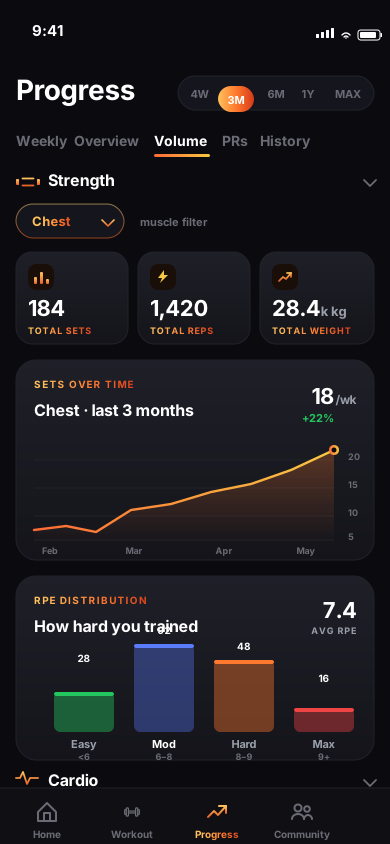
Track your home training on a chart

Log any exercise — bodyweight, dumbbells, bands — free and unlimited on iOS.

Download on theApp Store

Free to start · No interruptive ads · 14-day Hero trial

This guide is educational and not medical advice. Consult a qualified coach or medical professional before starting or changing a training program.

By Meitar Lazimi, founder of LiftHero · Last updated July 9, 2026.