One pair of dumbbells is a surprisingly complete gym. It covers every movement pattern — press, row, squat, hinge, lunge, curl and overhead press — enough for a full-body routine you can run anywhere. Here's a sample session and how to keep progressing when the weights run light.
A single pair of dumbbells covers a full-body routine. You get presses, rows, goblet squats, Romanian deadlifts, lunges, curls and shoulder presses — every major muscle group in one session. When your dumbbells feel light and you can't add load, you progress with reps, tempo, and unilateral (single-limb) work instead. It's highly effective for building muscle, especially for beginners and intermediates. The honest caveat is maximal strength: a fixed pair eventually can't keep overloading the way a loadable barbell can — but for general strength and muscle, one pair goes a long way.
Effectively, yes. The body moves in a handful of basic patterns — push, pull, squat, hinge, lunge — and a pair of dumbbells loads all of them. Press them overhead or off your chest, row them, hold one at your chest to squat, hinge with them for your hamstrings, and lunge while carrying them. Add curls and presses for the arms and shoulders, and you've trained the whole body without a single machine. Dumbbells also bring a bonus barbells don't: each side works independently, so they build balance and catch strength differences between limbs. The one thing you have to manage is progressive overload when a fixed pair starts to feel light.
Here's the full-body toolkit from a single pair, grouped by pattern.
| Pattern | Moves | Trains |
|---|---|---|
| Squat | Goblet squat, lunges, split squats | Quads, glutes |
| Hinge | Romanian deadlift, single-leg RDL | Hamstrings, glutes, back |
| Push | Dumbbell bench press, floor press, shoulder press | Chest, shoulders, triceps |
| Pull | Bent-over rows, single-arm rows | Back, biceps |
| Arms | Biceps curls, overhead triceps extension | Biceps, triceps |
The catch with dumbbells is that jumps between fixed pairs are often large, and you may not own many. So when you can't add weight, you overload other variables. Add reps at the same load until a set feels comfortable. Slow the tempo — a three-second lowering phase makes a light dumbbell feel much heavier. Shorten your rest to raise density. And lean on unilateral (single-limb) work: a single-arm press or single-leg RDL loads one side with the full dumbbell, effectively giving you a heavier stimulus without a heavier weight. Adjustable dumbbells help most of all. These levers are the same ones in progression methods, applied to a fixed pair.
Here's a complete session from one pair of dumbbells, hitting every pattern. Run it two to four times a week with a day between hard efforts:
Progress each session with the levers above — reps, tempo, then single-limb versions when you can't add load. For the wider picture of training at home, see home workouts.
A pair of dumbbells builds real muscle and strength, but it's fair to note where it slows. For maximal strength — grinding a near-limit load — a fixed pair eventually can't keep supplying enough overload. A barbell lets you add small, precise increments almost indefinitely; your dumbbells top out at whatever pair you own. Tempo, reps and unilateral work stretch that ceiling a long way, and adjustable dumbbells stretch it further, but an advanced lifter chasing peak strength will eventually want a barbell and plates. For building muscle and staying strong, one pair is plenty for the vast majority of people.
LiftHero logs any exercise you enter — dumbbell presses, rows, goblet squats, curls — free and unlimited, and charts weight and reps over time so you can see whether you're progressing. Because dumbbell progress often comes from reps and tempo rather than a bigger weight, a record is what tells a real upward trend from just repeating the same session. Saving a reusable routine you reload each week is the optional Hero upgrade; the logging and charts are free. To be clear about what it is and isn't: LiftHero measures your training — it doesn't auto-generate a program or add weight for you.
Yes. A single pair of dumbbells covers every movement pattern — presses, rows, goblet squats, Romanian deadlifts, lunges, curls and shoulder presses. That's a complete full-body routine, and for building muscle it's more than enough for beginners and intermediates.
A lot. Goblet squats and lunges for legs, dumbbell bench or floor press for chest, rows for back, RDLs for hamstrings, shoulder presses for delts, and curls for biceps. One pair trains the whole body in a single session.
When you can't add weight, add reps at the same load, slow the tempo and add pauses, shorten your rest, or switch to unilateral work — single-arm presses and rows, single-leg RDLs — which effectively loads one limb harder without a heavier dumbbell.
Yes, particularly for beginners and intermediates. Muscle grows from challenging, progressive effort, and dumbbells supply that across every muscle group. The honest limit is maximal strength — a fixed pair eventually can't overload the way a loadable barbell can.
Two to four full-body days a week suits most people using a single pair of dumbbells. Full-body sessions let you train every pattern often, and they're flexible around a busy schedule. Leave a day between hard sessions that hit the same muscles.
Yes. LiftHero logs any exercise you enter — dumbbell presses, rows, goblet squats — for free and unlimited, and charts weight and reps over time. Saving a reusable routine is the optional Hero upgrade. It tracks your training; it doesn't auto-generate a program.
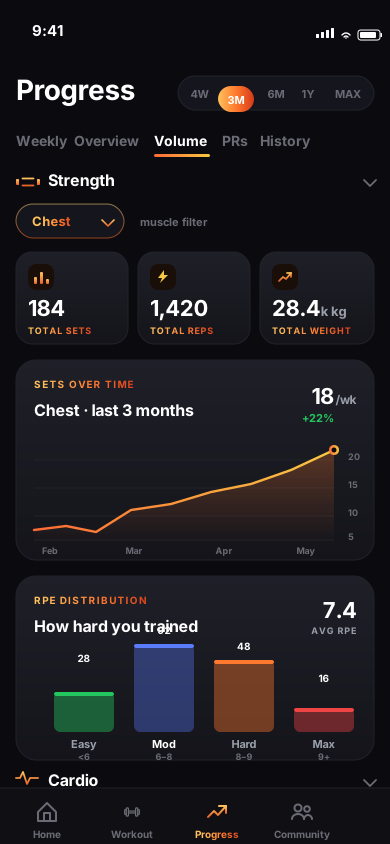
Log presses, rows, squats and curls — free and unlimited on iOS.
Download on theApp StoreFree to start · No interruptive ads · 14-day Hero trial
This guide is educational and not medical advice. Consult a qualified coach or medical professional before starting or changing a training program.
By Meitar Lazimi, founder of LiftHero · Last updated July 9, 2026.