The supplement aisle is loud, expensive, and mostly optional. Here's an honest overview: food and training do the heavy lifting, and only a short list of supplements has real support behind it. No hype, no invented studies — just what's worth your money and what isn't.
For most lifters, supplements are a small convenience layer, not a requirement. The supplement industry oversells — you build strength and muscle with training, enough protein, and enough sleep, using whole food alone. The short list with real support is narrow: creatine (strength and training performance), protein powder (a convenient food source of protein, not magic), and caffeine or a pre-workout (a short-term boost in focus and output). Everything else is mostly optional or unproven for the average, healthy lifter. Where the evidence is weak or mixed, the honest answer is to say so and save your money.
Not nearly as much as the marketing implies. The word "supplement" is the whole point — these are meant to supplement a solid diet and training plan, not replace them. If your training is inconsistent, your sleep is short, and your overall nutrition for lifting is a mess, no powder or capsule will fix that. Sort out the basics first and you'll get the vast majority of the results available to you. The uncomfortable truth for the industry is that most supplements are unnecessary for the average, healthy lifter — a handful have solid evidence, and the rest range from "mildly useful in specific cases" to "unproven." Spending most of your effort and money on food and training, and treating supplements as a minor add-on, is the honest, cost-effective approach.
Three supplements stand out because the evidence behind them is consistent, not because they're miracles. Creatine is one of the most studied supplements there is and is widely regarded as effective for strength and training performance in healthy adults — it's cheap and simple. Read the full creatine guide for how it works. Protein powder isn't magic at all; it's just a convenient, concentrated food source of protein that helps you hit your daily protein target when whole food is inconvenient — more in the protein powder guide. And caffeine, the main active ingredient in most pre-workouts, is a stimulant that can boost focus and output in the short term — a plain coffee does most of the job, as the pre-workout guide explains.
An honest rundown. "Evidence" here means how consistent the support is for a healthy lifter — not a promise of results, and not a health claim.
| Supplement | What it does | Evidence |
|---|---|---|
| Creatine | Supports strength and training performance; cheap and simple | Solid — one of the most studied |
| Protein powder | Convenient food source of protein to help hit your daily target | Solid as food — not magic |
| Caffeine / pre-workout | Short-term boost in focus and output before a session | Solid for caffeine; blends are extra |
| Beta-alanine | May help in high-rep sets; causes harmless tingling | Mixed / modest |
| Citrulline | Common pre-workout "pump" ingredient | Weak / mixed for most lifters |
| Multivitamin | Nutritional insurance if your diet has gaps | Situational, not performance |
| Most fat burners / test boosters | Marketed for fat loss or hormones | Unproven for most lifters |
A simple, honest filter beats chasing every new product. The loop:
And if you have a health condition, are pregnant, or take medication, talk to a doctor before starting any supplement — that's not boilerplate, it's the responsible order of operations.
Let's be clear about what LiftHero is: a strength-training tracker. It logs your sets, reps, weight and RPE, charts your progress over time, and detects personal records — so the training side, which is where most of your results come from, is measured and honest. What it is not is a nutrition app: LiftHero does not track food, supplements or macros. That's by design — plenty of tools handle food logging, and supplements are a minor add-on anyway. Use LiftHero to make sure the heavy lifting (literally) is progressing, keep your protein and overall diet solid with whole food, and add a simple supplement or two — like creatine — only if you choose to.
No. You can build muscle with training, enough protein and enough sleep, using whole food alone. Supplements are a small convenience layer on top of that, never a requirement. The supplement industry oversells this — food and training do almost all of the work, and most products add little for the average lifter.
A short list: creatine for strength and training performance, protein powder as a convenient way to hit your protein target, and caffeine for a short-term boost in focus and output. These have the most consistent support. Beyond them, most supplements are optional or unproven for the average, healthy lifter.
Creatine is one of the most studied supplements and is widely regarded as effective for strength and training performance in healthy adults. It is cheap and simple. If you have a health condition or take medication, check with a doctor first. See our full creatine guide for how it works and how to use it.
No. Protein powder is just a convenient, concentrated food source of protein, not a magic muscle builder. You can hit your protein target with whole foods alone. It is useful when whole food is inconvenient or you struggle to reach your target, but it does not beat food that provides the same protein.
Most pre-workouts are mainly caffeine plus extras, and caffeine is the main proven lever — a plain coffee does much of the same job. So-called fat burners are largely unproven for most people and are no substitute for diet and training. Where evidence is weak or mixed, it is honest to say so rather than promise results.
No. LiftHero is a strength-training tracker. It logs your sets, reps, weight and RPE and charts your training progress. It does not track food, supplements or macros. Use it to measure the training side; use whole food and, if you choose, a simple supplement or two on top.
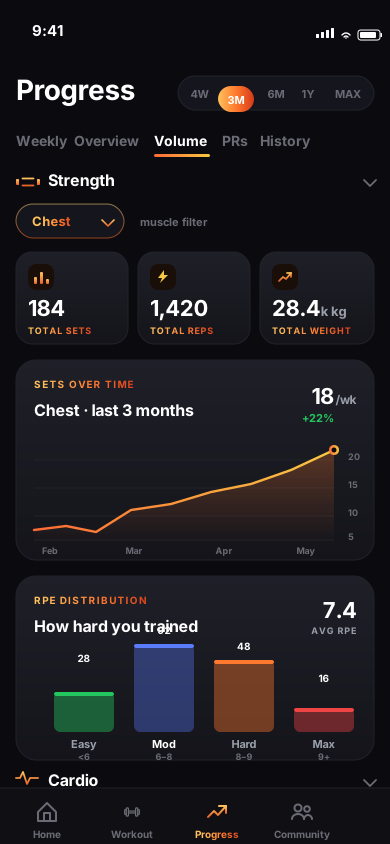
Supplements are a small add-on. Your training is the main event — log sets, reps, weight, RPE and PRs, free on iOS.
Download on theApp StoreFree to start · No interruptive ads · 14-day Hero trial
This guide is general education, not medical advice. Talk to a doctor before starting any supplement, especially with a health condition, if pregnant, or on medication.
By Meitar Lazimi, founder of LiftHero · Last updated July 9, 2026.