Learn

What Creatine Does and How to Take It

Creatine is the most studied supplement in the gym, and also the most misunderstood. It won't transform you overnight and it isn't a shortcut — but it's one of the few supplements with real, well-evidenced support behind it. Here's what it actually does, how to take it, and the truth about the myths.

Creatine monohydrate is one of the most researched and well-supported sports supplements. It helps your muscles replenish energy for short, hard efforts — like a heavy set — which over time can support greater strength, power, and training volume. The typical dose is about 3–5 g of monohydrate per day; a loading phase is optional and not required, and consistency matters more than timing. Stay hydrated, and stick with plain monohydrate — it's the most effective and cheapest form. It's broadly considered safe for healthy adults, but talk to a doctor before starting, especially with kidney issues or if pregnant. And no — it's not a steroid.

What is creatine?

Creatine is a natural compound your body already makes and that you get from foods like meat and fish. It's stored in your muscles, where it helps power short, intense bursts of effort — the kind you produce during a heavy set of lifts or a hard sprint. Supplementing with creatine simply tops up those muscle stores beyond what diet alone provides. It's not a stimulant, not a hormone, and not a quick fix — it's one of the most extensively studied supplements in sports nutrition, and among the small handful with genuinely strong evidence behind it. For lifters, that makes it one of the few supplements actually worth considering alongside a solid nutrition for lifting foundation.

What does creatine actually do?

Your muscles use a fast-access energy system for brief, explosive efforts, and creatine is central to how quickly that energy gets replenished between efforts. With fuller creatine stores, your muscles can regenerate that short-term energy a little faster — which in practice can mean squeezing out an extra rep or maintaining power across more sets. Over weeks and months, that small edge in each session can add up to greater strength, power, and total training volume, which is why it's so well-regarded for lifters. It's worth being clear about what it isn't: creatine doesn't build muscle directly. It supports the training that builds muscle, so it works best paired with hard, progressive lifting — not instead of it.

How to take creatine: dose, loading, and timing

The protocol is refreshingly simple. Here's what the evidence supports on dose, loading, and timing.

QuestionThe answerWhy
Which form?Plain creatine monohydrateMost researched, most effective, cheapest
How much?About 3–5 g per dayStandard maintenance dose that keeps stores topped up
Loading phase?Optional, not requiredFills stores faster, but steady daily dosing gets there too
When to take it?Any time — just be consistentIt builds up over time; daily consistency beats timing
Training days only?No — take it every dayRest days count; the goal is steady muscle saturation
Hydration?Drink normal amounts of waterMix it into a drink you'll reliably take each day

That's the whole protocol: monohydrate, ~3–5 g, every day, consistently. It's one of the simplest supplements to use correctly — the only real mistake is forgetting to take it.

The simple daily routine

You don't need to overthink this. The reliable approach:

  1. Pick monohydrate. Grab plain creatine monohydrate — it's the most researched, most effective, and cheapest form, and pricier versions don't beat it.
  2. Take about 3–5 g daily. A steady maintenance dose is all you need. A loading phase is optional; skipping it just means stores fill over a few weeks instead of days.
  3. Be consistent. Take it every day, training days and rest days alike, at whatever time you'll actually remember.
  4. Stay hydrated. Mix it into a drink you take reliably, and drink normal amounts of water through the day.

Consistency is the whole game. The benefit comes from keeping your muscle stores topped up over time, so a daily habit matters far more than any clever timing trick.

Busting the creatine myths

Where creatine fits with your nutrition and training

Creatine is a small edge on top of the basics — not a replacement for them. It supports hard training, but the training itself, along with enough protein and sensible overall nutrition for lifting, is what actually drives your results. Think of it as one reliable tool in a much bigger kit: get your training and nutrition right first, then add creatine as a well-evidenced bonus. LiftHero tracks your training — log your lifts and watch your strength trend — while you manage nutrition and supplements with the guidance above. Over weeks, that logged trend is how you actually see whether your training and your creatine routine are paying off in progressive overload. To be clear: LiftHero tracks your strength training, not your food, supplements, or macros — it's the measurement layer for the training half of the equation.
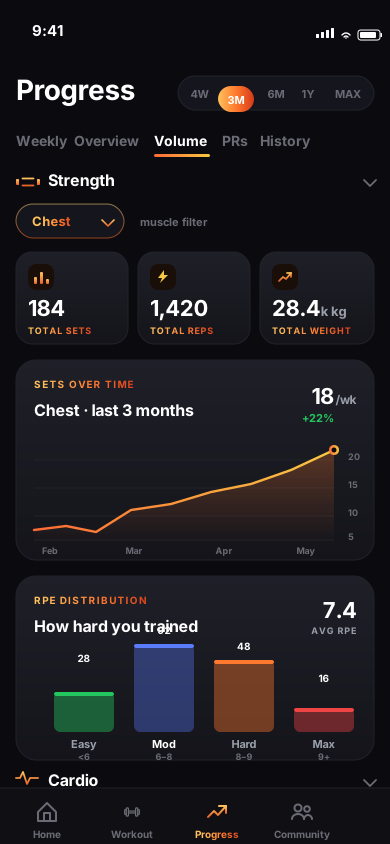
LiftHero progress chart tracking strength over time
LiftHero charts weight and volume per exercise over time, so you can see whether your training is trending up.

Frequently asked questions

What does creatine do?

Creatine helps your muscles replenish energy for short, hard efforts like a heavy set of lifts. Over time that can support greater strength, power, and training volume. It's one of the most researched and well-supported sports supplements for lifters.

How much creatine should I take?

A typical daily dose is around 3–5 g of creatine monohydrate. A loading phase of higher intake for the first week is optional and not required — taking a steady 3–5 g every day gets you to the same place, just a little more slowly.

Do I need to do a loading phase?

No. Loading fills your muscles faster, but it's optional. A consistent daily dose of about 3–5 g reaches the same saturation over a few weeks without loading. Consistency matters more than loading.

When should I take creatine?

Timing barely matters. Creatine works by building up in your muscles over time, so what counts is taking it every day, on training and rest days alike. Pick a time you'll remember and stay consistent.

Is creatine a steroid or dangerous?

No. Creatine is not a steroid — it's a natural compound found in food and made by your body, and it's one of the most studied supplements available. It's broadly considered safe for healthy adults, but talk to a doctor before starting, especially with kidney issues or if pregnant.

Which type of creatine is best?

Plain creatine monohydrate. It's the most researched and effective form and also the cheapest. Fancier or more expensive versions haven't been shown to outperform monohydrate, so there's no reason to pay more.

See if it's working

LiftHero tracks your training — log your lifts and watch strength trend — while you manage nutrition and supplements with the guidance above. Free on iOS.

Download on theApp Store

Free to start · No interruptive ads · 14-day Hero trial

This guide is general education, not medical or nutritional advice. Nutrition needs are individual — consult a registered dietitian or doctor before making big changes, especially with a health condition. Talk to a doctor before starting any supplement, especially with kidney issues or if pregnant.

By Meitar Lazimi, founder of LiftHero · Last updated July 9, 2026.