Learn · Nutrition

Pre-Workout: What's In It + Is It Worth It?

Pre-workout is sold as a secret weapon in a scoop. Peel back the flavouring and it's mostly caffeine with a few extras. Here's what's really in it, which ingredient actually earns its keep, why a coffee often does the same job, and how to use caffeine sensibly before a lift.

Most pre-workouts are mainly caffeine plus ingredients like citrulline and beta-alanine (the source of the harmless tingles). The one lever with solid support is caffeine — a stimulant that can boost focus and give a short-term lift in output. You don't need a fancy blend: a plain coffee delivers the same caffeine for far less. Beyond that, the extra ingredients range from modest to unproven for the average lifter, so where the evidence is weak or mixed it's honest to say so. Use caffeine deliberately, keep it away from bedtime so it doesn't wreck your sleep, and check with a doctor if you're sensitive, pregnant, or on medication.

What's actually in pre-workout?

Open the label of almost any pre-workout and the same picture emerges: caffeine does the heavy lifting, and everything else is supporting cast. You'll usually find citrulline, marketed for "pump"; beta-alanine, which produces the prickly skin tingle people associate with the product working (it's just a sensory side effect); plus flavourings, sweeteners, and a rotating list of other add-ins with catchy names. The proprietary blends and big ingredient lists make it look sophisticated, but the honest read is that one ingredient — caffeine — accounts for most of the noticeable effect, while the rest ranges from modestly helpful in specific cases to unproven for the average lifter.

The ingredient that actually works

If pre-workout has a genuine active ingredient, it's caffeine. It's a stimulant that can boost focus and perceived energy and give a short-term lift in training output — which is exactly why it's the core of nearly every product on the shelf. That's the honest ceiling of what to expect: it's a short-term performance aid, not a muscle builder. It won't add muscle, replace sleep, or substitute for a well-structured program — the training and recovery still do the real work. What it can do is help you show up sharper and push a little harder on a given day. Think of it as a nudge to your focus and output, used when you actually want it, not a foundation to lean on every session.

What each ingredient does

An honest rundown of a typical pre-workout. "Evidence" here means how consistent the support is for a healthy lifter — not a promise of results, and not a health claim.

IngredientWhat it's forEvidence
CaffeineShort-term boost in focus and outputSolid — the main lever
Beta-alanineMarketed for high-rep endurance; causes the tinglesMixed / modest
CitrullineMarketed for "pump" and blood flowWeak / mixed for most lifters
ElectrolytesHydration during trainingSituational, not performance
Proprietary "blends"Assorted extras with catchy namesLargely unproven; often underdosed
Plain coffeeDelivers the caffeine, cheaplyDoes the main job on its own

How to use caffeine sensibly before a lift

Caffeine is the part worth using, so use it deliberately — a coffee is a perfectly good delivery system. The loop:

  1. Start with a modest dose. A cup of coffee is often enough. See how you respond before reaching for a stronger scoop.
  2. Time it before your session. Take it a little ahead of training so it has time to kick in, rather than mid-workout when you need it now.
  3. Keep it away from bedtime. Caffeine lingers for hours. Avoid it later in the day, where it can hurt your sleep and, in turn, your recovery.
  4. Don't use it every session. Regular use builds tolerance, so the same dose does less. Save it for when you actually want the boost.

And the cautions matter: if you're sensitive to caffeine, pregnant, or on medication, talk to a doctor before using pre-workout or high-caffeine products. This is a stimulant, not a snack.

Cautions and common mistakes

Where LiftHero fits (and where it doesn't)

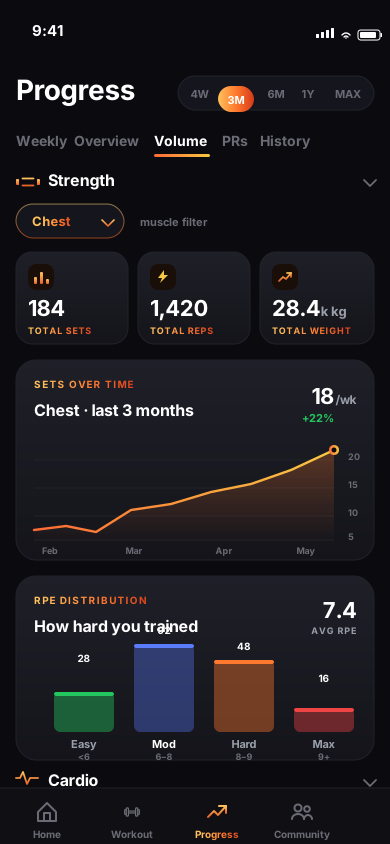
A quick reality check on LiftHero: it's a strength-training tracker. It logs your sets, reps, weight and RPE, charts your progress, and detects personal records — so you can see whether your training is actually moving. It does not track supplements, caffeine or food. Pre-workout is a minor, optional add-on anyway; caffeine can sharpen a session, but the results come from consistent, progressive training over weeks and months. So use caffeine sensibly on your own terms, keep your nutrition and protein solid, and let LiftHero measure the part that matters most — whether the bar is actually going up. If you want one evidence-backed supplement to read about, that's creatine.

LiftHero progress chart tracking weight lifted over time
LiftHero tracks your training — sets, reps, weight and PRs — not supplements, caffeine or food.

Frequently asked questions

What is actually in pre-workout?

Most pre-workouts are mainly caffeine plus a mix of extras like citrulline (marketed for pump) and beta-alanine (which causes a harmless skin tingle). There are often flavourings, sweeteners and various other add-ins. The one ingredient doing most of the proven work is caffeine; the rest ranges from modest to unproven for the average lifter.

Is pre-workout worth it, or does coffee work?

You don't need a fancy blend. The main proven performance lever is caffeine, and a plain coffee delivers that for a fraction of the cost. Pre-workout can be convenient if you like the format and flavour, but it isn't doing anything a sensible dose of caffeine can't. Where the extra ingredients' evidence is weak or mixed, it's honest to say so.

What does caffeine actually do before a lift?

Caffeine is a stimulant that can boost focus and perceived energy and give a short-term lift in output. That's the main reason it's the core of most pre-workouts. It's a short-term performance aid, not a muscle builder — the training and recovery still do the real work. It's not a substitute for enough sleep or a solid program.

Why does pre-workout make me tingle?

That tingling, prickly feeling on the skin is usually from beta-alanine, a common pre-workout ingredient. It's generally considered harmless and simply a sensory side effect, not a sign the product is working. If you find it unpleasant, a lower dose or a product without beta-alanine avoids it.

What are the downsides of pre-workout?

The main cautions are around caffeine: regular use builds tolerance so the same dose does less, and caffeine late in the day can hurt your sleep, which in turn hurts recovery and muscle growth. Some people are simply sensitive and feel jittery. If you're caffeine-sensitive, pregnant, or on medication, talk to a doctor before using it.

Does LiftHero track pre-workout or caffeine?

No. LiftHero is a strength-training tracker — it logs your sets, reps, weight and RPE and charts your training progress. It does not track supplements, caffeine or food. Use caffeine sensibly on your own terms, and use LiftHero to measure whether your training is actually progressing.
Caffeine can sharpen a session — training builds the strength

See whether the bar is actually going up over weeks. Log sets, reps, weight, RPE and PRs, free on iOS.

Download on theApp Store

Free to start · No interruptive ads · 14-day Hero trial

This guide is general education, not medical advice. Talk to a doctor before starting any supplement, especially with a health condition, if pregnant, or on medication.

By Meitar Lazimi, founder of LiftHero · Last updated July 9, 2026.