Learn · By lifter

Strength Training Over 40

Lifting weights isn't something you age out of — it's something that matters more the older you get. Here's why strength training is one of the best investments in your later decades, and how to start or return to it safely and sensibly.

Strength training is valuable and safe for most people at any age, and it's one of the best things you can do as you get older — for strength, muscle mass, bone and joint health, and the everyday capability to carry, climb, and stay independent. The core principles don't change after 40: progressive overload, compound lifts, and good technique still drive results. What changes is emphasis. Warm up more thoroughly, progress load a bit more patiently, prioritize recovery and sleep, and manage your joints with care. And if you have any health conditions, see a doctor before you begin. Done sensibly, lifting in your 40s, 50s, and beyond is a genuine game-changer.

Why strength training matters more after 40

From roughly your 30s onward, the body tends to lose muscle and strength gradually if nothing is done to counter it — a slow drift that quietly shrinks your capacity for everyday life. Resistance training is the most direct way to push back. Lifting helps you maintain and build muscle, supports bone and joint health, and preserves the practical strength that keeps you carrying groceries, playing with grandkids, and staying independent for longer. It's genuinely one of the best things you can do as you get older. Age is not a reason to avoid the weights — for most people, it's a reason to pick them up.

Do the principles change after 40?

No — and that's the good news. The fundamentals that build strength and muscle at 25 are the same ones that build them at 55: progressive overload (gradually doing a little more over time), compound lifts that train multiple muscles at once, and good technique practiced consistently. See the progressive overload guide for the core idea. What shifts after 40 isn't the principles but the emphasis — a handful of sensible adjustments that make training more sustainable and reduce the odds of a setback. None of them are complicated, and none of them require a special "over-40 program."

What sensible adjustments actually help?

You don't need a different philosophy — just a few dials turned up. These are the changes that make lifting after 40 comfortable and durable.

AdjustmentWhat it meansWhy it helps after 40
Warm up more thoroughlyA few minutes of easy cardio plus ramp-up sets before working weightPrepares joints and muscles; lowers injury risk
Prioritize recovery & sleepFull rest between sessions, good sleep, enough proteinAdaptation happens during recovery, which matters more with age
Progress load patientlySmaller, earned weight jumps over weeks, not every sessionLets connective tissue and joints keep pace with muscle
Manage your jointsControlled range of motion; swap painful variations for friendlier onesKeeps you training around old niggles instead of through them
Learn technique firstClean form on compounds before chasing heavy weightGood movement is the best long-term joint insurance
See a doctor firstGet cleared, especially with any health conditionsIndividual medical guidance beats general rules of thumb

How to start or return to lifting after 40

Whether you're picking up a barbell for the first time or coming back after years away, a calm, safety-forward on-ramp beats jumping straight into heavy training. The sequence:

  1. See a doctor first. Get a check-up and clearance before starting, especially if you have any health conditions, injuries, or have been inactive for a while.
  2. Warm up thoroughly. Spend more time here than you might have in your 20s — easy cardio plus ramp-up sets to prepare joints and muscles. See the warm-up guide.
  3. Learn technique before load. Focus on clean, controlled form on compound lifts before chasing weight. A qualified coach in the first few weeks is worth it.
  4. Progress load patiently. Use progressive overload with smaller, earned increments over weeks — let joints and connective tissue keep pace.
  5. Prioritize recovery and sleep. Give muscles and joints time between sessions, sleep well, and eat enough protein. See the recovery guide.
  6. Be consistent. Two to three full-body sessions a week, sustained over months, beat occasional hard workouts.

Recovery and sleep do more of the work now

If there's one dial to turn up after 40, it's recovery. Muscle and joints adapt between sessions, not during them, and that process tends to want a little more time and a little more sleep as you age. Space hard sessions so you're recovered before the next one, sleep as well as you reasonably can, and eat enough protein to support repair. This isn't about training less — it's about training in a rhythm your body can absorb, which is exactly what lets you keep progressing month after month. The full picture is in the muscle recovery guide.

Managing joints and old injuries

Plenty of people over 40 carry an old knee, shoulder, or back story — and for most, that's a reason to train smart, not to avoid training. Thorough warm-ups, controlled range of motion, and patient load progression all help joints tolerate work. If a particular lift aggravates something, there's almost always a friendlier variation that trains the same muscles. That said, joints and injuries are individual, so this general guidance doesn't replace a professional: if you have pain or an old injury, talk to a doctor or physical therapist before building your training around it. Good technique remains the best long-term insurance for your joints.

How to track your training (and how LiftHero helps)

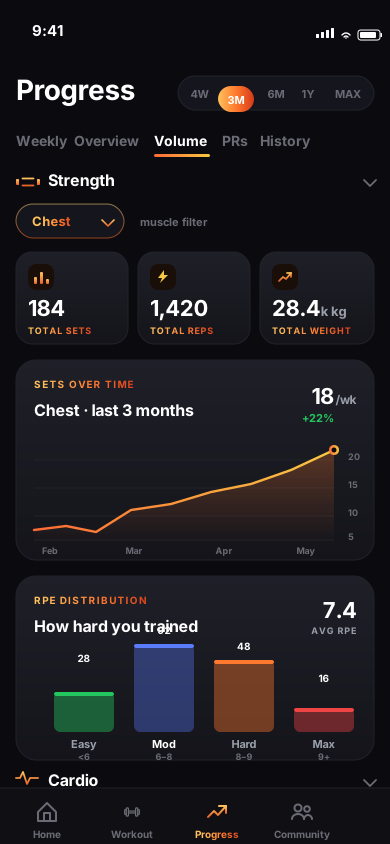
LiftHero logs your sets, reps, weight and effort over time and charts the trend, so patient progression after 40 is easy to see and stay honest about. Log each set as you lift; over weeks the app shows whether you're genuinely progressing or just repeating workouts — which is exactly the feedback that keeps sensible, unhurried overload on track. To be clear about what it is and isn't: LiftHero is the measurement layer, not a decision engine. It does not auto-add weight and does not auto-generate or adapt your program — you decide the progression, the app measures it. Pair it with a structured plan and, if you're new or returning, a qualified coach.

LiftHero progress chart tracking weight lifted over time
LiftHero charts weight and volume per exercise over time, so patient progression stands out from a plateau.

Frequently asked questions

Is it safe to start lifting weights after 40?

For most people, yes — strength training is widely considered safe and beneficial at any age. It's one of the best things you can do as you get older for strength, muscle, bone and joint health, and everyday capability. See a doctor first if you have any health conditions.

Do the training principles change after 40?

No. Progressive overload, compound lifts, and good technique still drive results. What changes is emphasis: warm up more thoroughly, progress load a bit more patiently, and prioritize recovery and sleep.

Can you build muscle after 40?

Yes. Muscle-building slows somewhat with age but responds strongly to resistance training and adequate protein well into later decades. Consistent progressive training remains the driver.

How often should someone over 40 lift?

Two to three sessions a week is a sensible, sustainable starting point for most people, with full recovery between sessions. Consistency over months matters more than any single hard workout.

What if I have joint pain or an old injury?

Talk to a doctor or physical therapist before training around it. In general, controlled range of motion, thorough warm-ups, and patient load progression help manage joints — but individual medical guidance comes first.

Should I see a doctor before starting?

If you have any health conditions, take medication, or have been inactive, yes — get cleared first. This guide is general educational content, not medical advice.
Track every session, at any age

Log sets, reps, weight and PRs and watch your progress over months — free on iOS.

Download on theApp Store

Free to start · No interruptive ads · 14-day Hero trial

This guide is general educational content, not medical advice. Check with a doctor before starting a new training program.

By Meitar Lazimi, founder of LiftHero · Last updated July 9, 2026.