Learn · Getting started

Compound vs Isolation Exercises

Every exercise you'll ever do falls into one of two camps, and understanding the split is one of the fastest ways to build a smarter program. Here's what separates compound from isolation lifts — and exactly how to use each.

Compound exercises are multi-joint movements — the squat, bench press, deadlift, row and overhead press — that work several muscle groups at once, build the most strength and muscle per exercise, and form the base of a good program. Isolation exercises are single-joint movements — curls, extensions and raises — that target one muscle, making them great for weak points and added volume. The two aren't rivals: well-built programs put compounds first and use isolation as accessories. Apply progressive overload to both, and pick your rep ranges to match the job each is doing.

What are compound exercises?

Compound exercises are multi-joint movements that recruit several muscle groups working together. The classic five are the squat, bench press, deadlift, barbell row and overhead press. Because they load multiple joints and muscles at once, you can move heavier weight, and each rep trains a lot of you — which is why they deliver the most strength and muscle per exercise and anchor almost every serious program. They're also the most efficient use of your time: one heavy compound does the work of several smaller movements. If you're new, these are the lifts to learn first, covered in how to start lifting.

What are isolation exercises?

Isolation exercises are single-joint movements that target one muscle in relative isolation. Think biceps curls, triceps extensions, leg extensions, leg curls and lateral raises — each moves around one joint and focuses the work on a specific muscle. They can't be loaded as heavily as compounds and they train less of you per rep, but that narrow focus is precisely their value. Isolation work lets you drive volume into a lagging muscle, bring up a weak point that the big lifts miss, or add training stimulus without the heavy systemic fatigue a barbell squat brings. They're the detail work of a program — the accessories that round out what the compounds start.

Compound vs isolation at a glance

Both build muscle and both belong in a good program — they just do different jobs. Here's how they compare across the traits that matter.

CompoundIsolation
Joints involvedMultiple (multi-joint)One (single-joint)
Muscles trainedSeveral at oncePrimarily one
Weight you can moveHeaviestLighter
Strength & muscle per exerciseMostTargeted, narrower
ExamplesSquat, bench, deadlift, row, pressCurl, extension, leg curl, raise
Best role in a programFoundation — do firstAccessories — weak points, extra volume
Systemic fatigueHigherLower

How programs use both

Good programs don't pick a side — they lead with compounds and finish with isolation. The structure is simple: open the session with a big multi-joint lift while you're fresh and can move the most weight safely, build the workout around one or two compounds that drive the bulk of your gains, then add a few isolation accessories to target specific muscles, address weak points, or add volume without heavy systemic fatigue. Order matters — leading with heavy compounds means your most important lifts get your best energy, whereas pre-fatiguing small muscles with isolation first can limit what you lift on the big movements. Whichever you're doing, apply progressive overload to both and choose sensible rep ranges for each.

  1. Open with a compound lift. Squat, bench, deadlift, row or press — while you're fresh.
  2. Build the session around compounds. One or two big lifts form the core of each workout.
  3. Add isolation as accessories. Curls, extensions and raises to target muscles and weak points.
  4. Progress both over time. Track weight and reps and add a little, so both keep adapting.

Track both in LiftHero

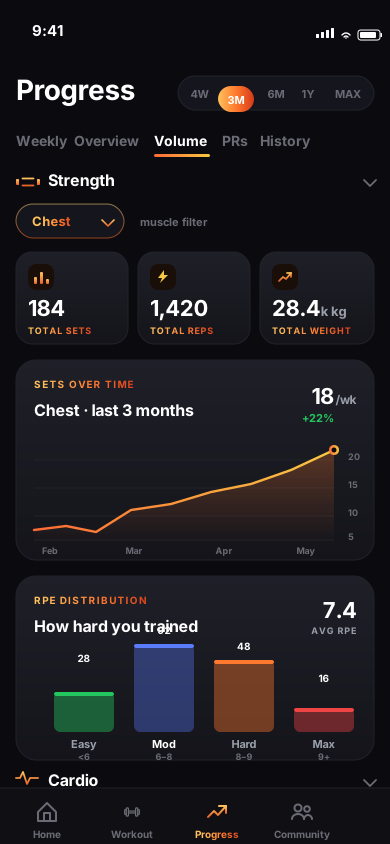
LiftHero lets you track your compound and isolation work in one place — log any set free with unlimited history, and the app charts weight and volume per exercise so you can apply progressive overload to your big lifts and your accessories alike. It records what you log; it does not auto-generate a program or pick your exercises for you — you build the workout, the app measures it. Saving a full custom plan is the optional Hero upgrade, but logging every set and tracking the trend is free. Browse the movements in the exercise library and log both your compounds and your isolation sets as you go.

LiftHero progress chart tracking exercises over time
LiftHero charts weight and volume per exercise, so both your compound lifts and isolation accessories show clear progress.

Frequently asked questions

What is the difference between compound and isolation exercises?

Compound exercises are multi-joint movements — the squat, bench press, deadlift, row and overhead press — that work several muscle groups at once and let you move the most weight. Isolation exercises are single-joint movements — like biceps curls, triceps extensions and lateral raises — that target one muscle. Compounds build the base of a program; isolation refines it.

Are compound or isolation exercises better?

Neither is strictly better — they do different jobs. Compound lifts build the most strength and muscle per exercise, so they should form the base of most programs. Isolation exercises are excellent for targeting a lagging muscle, adding volume without heavy fatigue, and refining details. The best approach uses compounds as the foundation and isolation as accessories rather than choosing one over the other.

Should beginners do isolation exercises?

Beginners should prioritise the main compound lifts, which train the most muscle and build the movement patterns and strength base everything else rests on. A little isolation work is fine and can help with weak points or muscles that compounds hit less directly, but it shouldn't crowd out the big lifts early on. Master the compounds first, then layer isolation in.

Do compound exercises build more muscle?

Compound lifts build the most muscle per exercise because they load several muscle groups at once and let you handle heavier weights, making them efficient for overall growth and strength. Isolation moves still build muscle effectively for the specific muscle they target — they're just narrower. For overall size, compounds do the heavy lifting; isolation fine-tunes the muscles you want to emphasise.

What are examples of compound and isolation exercises?

Compound examples include the squat, bench press, deadlift, barbell row and overhead press — all multi-joint. Isolation examples include the biceps curl, triceps extension, leg extension, leg curl and lateral raise — all single-joint moves that target one muscle. Most good programs open with compounds and add a few isolation exercises as accessories afterwards.

In what order should I do compound and isolation exercises?

As a general rule, do compound lifts first, while you're fresh and can move the most weight safely, then finish with isolation accessories. Leading with heavy multi-joint work means your big lifts get your best energy and focus, and pre-fatiguing small muscles with isolation first can limit how much you lift on the compounds. There are exceptions, but compounds-first is the reliable default.
Track compounds and accessories

Log any set free with unlimited history — free on iOS.

Download on theApp Store

Free to start · No interruptive ads · 14-day Hero trial

This guide is educational and not medical advice. Consult a qualified coach or medical professional before starting or changing a training program.

By Meitar Lazimi, founder of LiftHero · Last updated July 9, 2026.