Learn · Conditioning

HIIT vs LISS: Which Cardio Is Better?

Short and brutal, or long and easy? HIIT and LISS are the two ends of the cardio spectrum, and lifters argue about them endlessly. The truth is neither is "better" in the abstract — they trade off differently, and the right pick depends on your goal, your schedule and how much recovery you have to spare.

HIIT (high-intensity interval training) is short, hard bursts of effort with recovery between them — time-efficient, but more fatiguing and more likely to interfere with lifting recovery, especially the legs. LISS (low-intensity steady state) is easy, continuous work like walking or gentle cycling — it's easy to recover from, stacks well with lifting, and lets you pile up fat-loss volume cheaply. Both work. Fat loss comes down to your overall energy deficit, not the cardio label. Choose by recovery, time and preference — and since protecting recovery matters when you lift, many lifters lean toward LISS for most of their cardio.

intensity ↑ time → HIIT LISS
HIIT spikes hard then eases; LISS holds a steady, easy-to-recover pace. Both burn calories — they cost your recovery differently.

What is HIIT?

HIIT — high-intensity interval training — alternates short, near-maximal efforts with brief recovery periods: think hard bike sprints, hill repeats or circuit intervals. Its headline appeal is time efficiency. You can get a strong cardiovascular stimulus and burn a lot of energy in a compressed session, which is genuinely handy when you're busy. The catch is that intensity has a cost. HIIT is fatiguing — it leans on the same hard, glycolytic effort that heavy leg training does, so it competes more directly with your lifting recovery. Stack too much of it next to squats and deadlifts and you can feel the drag on your working sets. Used in small, well-placed doses, HIIT is a useful tool; used carelessly near heavy lower-body days, it's the fastest way to feel the interference effect.

What is LISS?

LISS — low-intensity steady state — is exactly what it sounds like: an easy, continuous pace held for a longer stretch. Walking is the classic example, along with easy cycling, the elliptical or a relaxed incline treadmill. The defining feature is that it's easy to recover from. Because the intensity stays low, LISS barely competes with lifting for recovery, so you can add a lot of it without denting your strength work — even on rest days. That makes it a quietly excellent tool for fat-loss volume: you can accumulate a meaningful amount of extra energy burn at almost no fatigue cost, without spiking hunger the way brutal sessions can. It's slower per minute than HIIT, but it's forgiving, sustainable and hard to overdo. For a lot of lifters, LISS is the default cardio for exactly these reasons — and it overlaps with the low-fatigue daily-steps approach.

HIIT vs LISS: the trade-offs

Neither wins outright — they're strong in different columns. Here's the honest side-by-side.

FactorHIITLISS
IntensityHigh — hard intervals near max effortLow — easy, conversational pace
Time efficiencyHigh — big stimulus in less timeLower — needs more minutes for the same burn
Recovery costHigh — fatiguing, taxes the same systems as hard liftingLow — easy to recover from
Interference with liftingMore, especially for the legsMinimal — stacks well with lifting
Fat-loss roleBurns a lot fast; harder to do much ofGreat for volume — lots of low-cost activity
Best placementAway from leg day; a couple short sessions/weekAlmost anytime, even on rest days

Which should a lifter choose?

If your first priority is strength or muscle, the tiebreaker is recovery — and that's why many lifters lean toward LISS for the bulk of their cardio. It gives you heart-health and fat-loss benefits without meaningfully eating into the recovery your lifting needs. That doesn't make HIIT off-limits: it's a fair pick when you're short on time, recover well, and keep it to a couple of short sessions placed away from heavy leg training. A common, sensible setup is mostly LISS with a small amount of HIIT — daily walks plus one or two short interval sessions a week. The best choice is also the one you'll actually do, so preference counts. Whatever the mix, keep lifting the priority and read the fuller picture in cardio for lifters.

How to pick the right cardio for you

Work through it in order rather than chasing whichever style is trending:

  1. Start from your main goal. Strength and muscle first? Lean LISS to protect recovery. Short on time and recovering well? HIIT can fit.
  2. Check your recovery budget. The harder your lifting week already is, the more you should favor low-fatigue LISS over fatiguing intervals.
  3. Match cardio to the calendar. Use HIIT sparingly and away from leg day; use LISS freely, even on rest days, since it barely competes for recovery.
  4. Use LISS for fat-loss volume. When cutting, easy steady cardio adds lots of low-cost activity without wrecking appetite or your lifts.
  5. Adjust from your lifting trend. If logged strength stalls, cut HIIT first and shift toward walking — let your lifts referee the balance.

Where LiftHero fits (and where it doesn't)

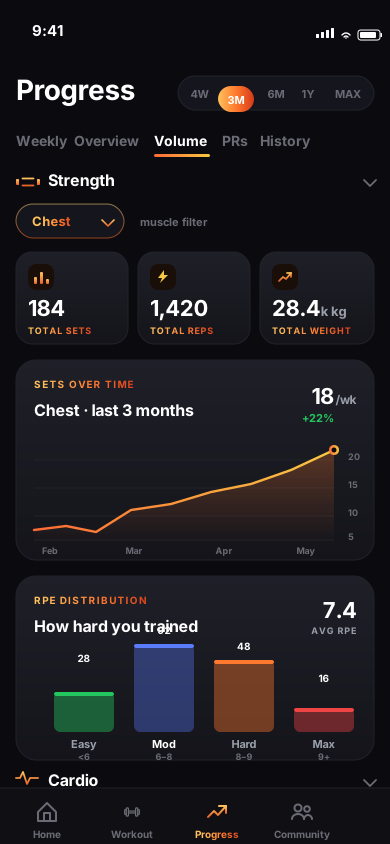
LiftHero is a strength-training tracker. It logs your lifts, sets, reps, weight and RPE and flags personal records — and to be clear, it does not track cardio, intervals, heart rate or steps. It won't count your HIIT rounds or your walking minutes. What it does do is keep an honest record of the thing HIIT and LISS are supposed to leave intact: your strength. Since HIIT is the more fatiguing option, LiftHero is a useful early-warning system — if your logged lifts keep trending up while you add intervals, your recovery is coping; if they flatten, that's the signal to shift more of your cardio toward LISS. Pair it with a plan like Push Pull Legs and let the data decide your cardio mix.
LiftHero progress chart tracking weight lifted over time
LiftHero charts your strength over time, so you can tell whether HIIT fatigue is affecting your lifts.

Frequently asked questions

What's the difference between HIIT and LISS?

HIIT is high-intensity interval training — short, hard bursts with recovery between them. LISS is low-intensity steady state, like walking or easy cycling held at an easy pace for a longer, continuous stretch.

Is HIIT or LISS better for fat loss?

Both work; fat loss is driven mostly by your overall energy deficit. HIIT burns a lot in less time, LISS lets you add lots of low-fatigue volume. Many lifters lean on LISS because it's easy to recover from.

Which is better for lifters, HIIT or LISS?

Many lifters favor LISS because it barely competes with lifting for recovery. HIIT is time-efficient but more fatiguing and can interfere more with lifting, especially leg training, so use it sparingly if strength is the goal.

Does HIIT interfere with lifting more than LISS?

Generally yes. HIIT is more fatiguing and shares more with hard leg training, so it tends to eat into recovery more. LISS is gentle enough that it stacks well alongside a lifting program.

How often should I do HIIT?

If strength is the priority, a couple of short HIIT sessions a week is plenty, kept away from leg day. More than that and the fatigue can start to compete with your lifting recovery.

Does LiftHero track cardio?

No. LiftHero tracks strength training — lifts, sets and reps — not cardio, intervals or steps. It helps here by showing whether your strength holds as you add either style of cardio.

Protect your gains

Whichever cardio you pick, LiftHero logs your lifts, sets, reps, RPE and PRs so you can see if fatigue is creeping in. It tracks strength training — not cardio or steps. Free on iOS.

Download on theApp Store

Free to start · No interruptive ads · 14-day Hero trial

This guide is general education, not medical advice. Check with a doctor before starting a new exercise program, especially with a heart condition.

By Meitar Lazimi, founder of LiftHero · Last updated July 10, 2026.