Cutting is how you get leaner without undoing the muscle you worked to build. The trap is going too hard — crash the calories and you'll lose strength and muscle along with the fat. Here's how to run a smart cut that strips fat while protecting your gains.
Cutting means eating in a calorie deficit to lose fat while preserving muscle. The deficit is what drives fat loss, but three things decide whether you keep your muscle through it: a moderate deficit (not an extreme crash diet), high protein to spare muscle, and continued heavy lifting that gives your body a reason to hold onto the muscle it has. Aim for a sustainable rate of loss, manage hunger and energy so you can stick with it, and track your weight trend over weeks to adjust. Done right, most of what you lose is fat — and your strength stays close to where it was.
Cutting is a phase where you eat in a calorie deficit — consistently taking in less energy than you burn — so your body draws on stored fat and you get leaner. It's the mirror image of bulking, where you eat in a surplus to add muscle. But a cut isn't just "eat less." The goal is to lose fat specifically while holding onto the muscle you've built, because in a deficit your body can burn muscle for energy too if you don't give it reasons not to. That's why a good cut is built on three pillars — a moderate deficit, high protein, and continued hard training. Understanding your calories and energy balance is the foundation the whole cut stands on.
It's tempting to slash calories hard and lose weight fast, but an aggressive deficit works against you. Too big a cut tanks your energy, so your training suffers and you can't lift with the intensity that protects muscle. It also increases the share of weight you lose that comes from muscle rather than fat, and it's miserable to sustain — which is why crash diets rebound. A moderate deficit keeps you fueled enough to keep lifting heavy, preserves more muscle, and loses fat at a pace you can actually stick with week after week. Slower fat loss that you finish beats fast fat loss you quit. The best deficit is the one that strips fat while letting you train hard and stay sane.
Losing fat is easy; losing fat and keeping muscle is the real skill. These three levers decide how much muscle survives your cut.
| Lever | What to do | Why it protects muscle |
|---|---|---|
| Moderate deficit | Eat a sensible amount below maintenance, not an extreme crash | Leaves energy to train hard; slows muscle loss |
| High protein | Push protein toward the top of the general range | Provides building blocks; blunts muscle breakdown |
| Keep lifting heavy | Train near your usual weights and intensity | Gives the body a reason to retain the muscle |
| Sustainable rate | Target ~0.5–1% bodyweight loss per week | Faster loss risks stripping muscle too |
| Sleep & recovery | Protect sleep; manage stress and hunger | Supports recovery and muscle retention |
Miss any one of these and more of your loss comes from muscle. Hit all of them and the scale drops while your strength barely moves — the whole point of a good cut.
Like a bulk, a cut is a loop you run and adjust from real data — not a fixed meal plan you white-knuckle. The sequence:
The system self-corrects. You won't nail the numbers on day one — you watch the trend and nudge as you go.
Slow enough to keep your muscle. A sustainable cut aims for a steady rate of loss — often around 0.5–1% of bodyweight per week — because that pace lets your body preferentially burn fat while training and high protein defend your muscle. Lose much faster and you risk stripping muscle along with the fat, and the aggressive deficit that fast loss requires is usually the kind people can't sustain. Leaner people should lean toward the slower end, since there's less fat to lose and more risk to muscle, while someone with more to lose can often move a bit faster early on. Judge progress by the multi-week weight trend, not the daily scale, which swings with water, food, and sodium.
A deficit means less energy coming in, so some hunger and lower energy are simply part of the deal — the goal is to manage them, not eliminate them. High protein helps twice here: it's the most filling macro and it protects muscle. Lean on high-volume, filling foods — vegetables, lean proteins, and fibrous carbs that fill your stomach for few calories — so you feel fed on less. Protect your sleep, since poor sleep amplifies hunger and hurts recovery, and keep the deficit moderate so it stays livable. For the broader picture of eating around training, see the nutrition for lifting guide, and dial your protein with the protein intake guide. A cut you can sustain beats a perfect one you abandon.
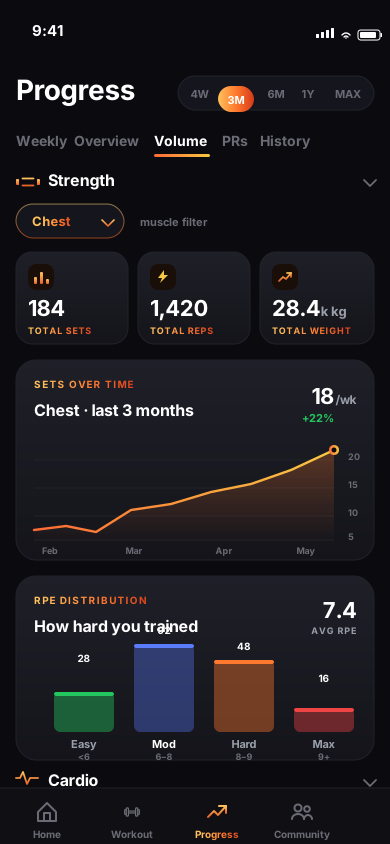
LiftHero tracks your training — log your lifts and watch your strength trend — while you manage nutrition with the guidance above. On a cut that's exactly the signal you want to watch: if your lifts hold steady while the scale drops, you're losing fat and keeping muscle, which is the whole goal. If your logged weights start sliding fast, that's an early warning your deficit is too aggressive. Log every set as you go, and LiftHero charts your weight and volume per exercise so you can see whether you're holding your strength through the cut. To be clear about what it does and doesn't do: LiftHero tracks your strength training, not your food, calories, or macros — you handle the eating side with the principles here, and the app keeps eyes on whether your muscle is surviving the cut.
Cutting means eating in a calorie deficit to lose body fat while doing everything you can to hold onto muscle. It combines a moderate deficit, high protein, and continued heavy training so the weight you lose is mostly fat, not muscle.
A moderate deficit works better than an extreme one. Too aggressive a cut tanks your energy, hurts your training, and risks losing more muscle. A moderate deficit lets you keep lifting hard and lose fat at a sustainable pace you can actually stick to.
Three levers: keep protein high to give your body building blocks, keep lifting heavy so your body has a reason to retain muscle, and use a moderate rather than extreme deficit. Do all three and most of the weight you lose is fat.
Protein is even more important in a deficit because it helps spare muscle and keeps you full. Many people aim toward the higher end of the general range of about 1.6–2.2 g per kg of bodyweight per day. See the protein guide for details.
A sustainable rate, often around 0.5–1% of bodyweight per week, preserves muscle and is easier to maintain. Losing much faster increases the risk of shedding muscle along with fat and usually isn't sustainable.
A deficit means less energy coming in, so some hunger and lower energy are normal. Managing them with high protein, high-volume filling foods, enough sleep, and a moderate rather than extreme deficit makes a cut far more sustainable.
LiftHero tracks your training — log your lifts and watch strength trend — while you manage nutrition with the guidance above. Free on iOS.
Download on theApp StoreFree to start · No interruptive ads · 14-day Hero trial
This guide is general education, not medical or nutritional advice. Nutrition needs are individual — consult a registered dietitian or doctor before making big changes, especially with a health condition.
By Meitar Lazimi, founder of LiftHero · Last updated July 9, 2026.