Bulking is how you build muscle on purpose — eat a bit more than you burn, train hard, and let your body turn the extra fuel into size. But "eat big" is where most people go wrong. Here's how to run a smart bulk that adds muscle while keeping fat gain in check.
Bulking means eating in a modest calorie surplus while training hard to build muscle. The extra energy gives your body the fuel and building blocks to add size, but the size only becomes muscle if the training stimulus is there. The single biggest mistake is going too big: a small surplus builds a better muscle-to-fat ratio than a huge one, because past a point extra calories just become fat. Aim for a modest surplus, get enough protein, gain weight slowly, and keep progressing in the gym. Track your weight trend over weeks and adjust — that's the whole game.
Bulking is a training-and-eating phase where you deliberately eat in a calorie surplus — consistently taking in a bit more energy than you burn — so your body has the raw material to build muscle. It's the opposite of cutting, where you eat in a deficit to lose fat. The key word is modest. A surplus is necessary to add tissue, but a bigger surplus does not build muscle any faster once you're past a small daily excess — the extra just gets stored as fat. A good bulk is really about doing three things at once: eating slightly more than maintenance, hitting your protein, and training hard enough to earn the growth. Understanding your calories and energy balance is the foundation the whole phase sits on.
There's a hard ceiling on how fast you can build muscle, and no amount of extra food raises it. Your body can only add so much muscle per week, so once your surplus covers that, every additional calorie has nowhere to go but fat storage. A small daily surplus keeps you just above the line needed to grow, which gives you a much better muscle-to-fat ratio — you gain more of the good stuff and less of the stuff you'll have to diet off later. A huge surplus doesn't speed muscle up; it just front-loads fat gain, shortens how long you can keep bulking, and makes the eventual cut longer and harder. Patience wins here: gaining slower means gaining leaner.
Both add weight, but they add very different weight. Here's how the two approaches compare on the things that matter.
| Factor | Lean bulk | Dirty bulk |
|---|---|---|
| Surplus size | Small and controlled (~5–15% over maintenance) | Large, often unmeasured |
| Rate of gain | Slow and steady | Fast on the scale |
| Muscle-to-fat ratio | More muscle, less fat | More fat per pound gained |
| Food quality | Mostly whole foods, tracked protein | Whatever hits the calorie number |
| The eventual cut | Shorter and easier | Longer and harder |
| Best for | Most people, most of the time | Rare cases (very lean, hard-gainer) |
For almost everyone, a lean bulk is the better choice. A dirty bulk feels productive because the scale moves fast, but most of that speed is fat — and you pay for it later with a longer, more punishing cut.
A good bulk isn't set-and-forget — it's a loop you run and adjust from real data. Here's the sequence:
The whole system self-corrects. You don't need a perfect starting number — you need to watch the trend and nudge, week after week.
Slower than the internet makes it look. A sensible bulk aims for a slow, steady rate of gain — a small fraction of your bodyweight per week — because that pace tracks closely with how fast you can actually build muscle. Gain much faster and the extra weight is mostly fat riding along for no benefit. Newer lifters can gain a touch faster since their muscle-building potential is high early on, while experienced lifters should crawl, because their rate of muscle gain has slowed and any excess spills straight into fat. If the scale is jumping several pounds in a couple of weeks, that's your cue to pull calories back. Muscle takes time — you can't rush the biology by eating more.
A surplus provides the energy, but protein provides the material your body assembles into muscle. Get enough of it — a widely used general range is about 1.6–2.2 g per kg of bodyweight per day — and spread it across your meals rather than cramming it into one. The protein intake guide covers targets and timing in depth. Beyond protein, fill most of the surplus with quality whole foods and enough carbohydrate to fuel hard training, and don't neglect fats for hormone health. For the bigger picture of how to structure meals around lifting, see the nutrition for lifting guide. A bulk is not a free pass to eat anything — it's a controlled surplus of mostly good food.
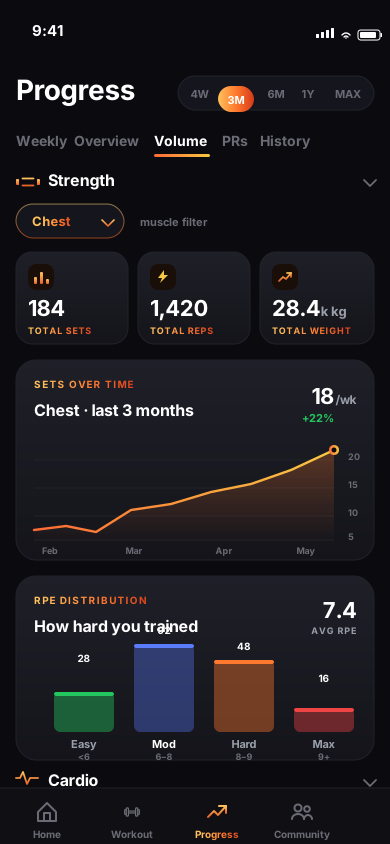
LiftHero tracks your training — log your lifts and watch your strength trend — while you manage nutrition with the guidance above. That split matters: a bulk works only if the surplus is being spent on progress in the gym, and the way you know it's working is that your lifts keep climbing over the weeks. Log every set as you go, and LiftHero charts your weight and volume per exercise so you can see real progressive overload instead of guessing. To be clear about what it does and doesn't do: LiftHero tracks your strength training, not your food, calories, or macros — you handle the eating side with the principles here, and the app makes sure the training half of the bulk is actually moving.
Bulking means eating in a modest calorie surplus while training hard so your body has the extra energy and building blocks to add muscle. The goal is to gain mostly muscle while keeping fat gain in check, not just to put on weight.
A modest surplus, often around 5–15% above maintenance, generally builds muscle with a better muscle-to-fat ratio than a huge surplus. Bigger surpluses don't add muscle any faster past a point — they mostly add fat. Start small and adjust from your weight trend.
A lean bulk uses a small, controlled surplus with quality food to minimise fat gain. A dirty bulk means eating a large surplus with little regard for the amount, which adds weight fast but a lot of it is fat you later have to cut.
Slowly. A common guideline is a fraction of a percent of bodyweight per week, which for many people means gaining gradually rather than several pounds a month. Faster gain usually means more of the gain is fat.
Getting enough protein is essential for muscle growth. A widely used general range is about 1.6–2.2 g of protein per kg of bodyweight per day, spread across meals. See the protein guide for details.
Yes. The surplus provides energy, but the training stimulus is what tells your body to build muscle rather than store fat. Keep applying progressive overload so the extra calories are put to work.
LiftHero tracks your training — log your lifts and watch strength trend — while you manage nutrition with the guidance above. Free on iOS.
Download on theApp StoreFree to start · No interruptive ads · 14-day Hero trial
This guide is general education, not medical or nutritional advice. Nutrition needs are individual — consult a registered dietitian or doctor before making big changes, especially with a health condition.
By Meitar Lazimi, founder of LiftHero · Last updated July 9, 2026.